If you play tennis — or you’re choosing between the two — you’ve probably asked how the sports compare. The padel vs tennis debate is one of the most common questions new players have, especially here in the UAE where padel has exploded, with 950+ courts across 320+ venues and search interest up over 3,000% in five years. The short version: padel shares tennis’s DNA but is faster to learn, more social and easier on the body. Here are the 7 key differences every beginner should know.
1. The Court Is Smaller and Enclosed
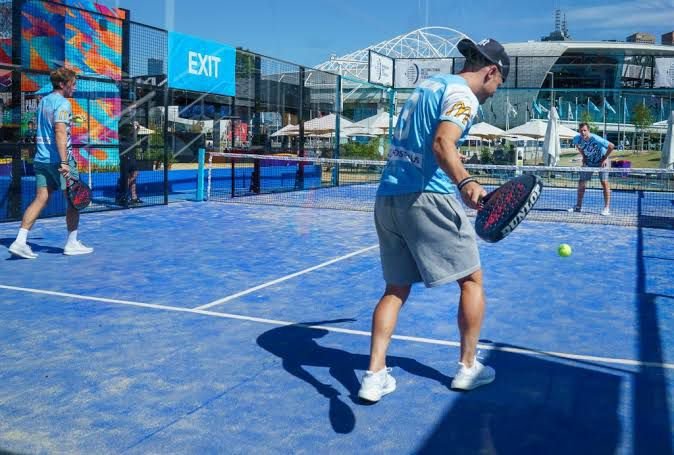
A padel court is about a third the size of a tennis court and is enclosed by glass walls and metal mesh. In tennis, a ball that leaves the court is dead. In padel, the walls are part of the game — the ball can rebound off them and stay in play, squash-style. The smaller, enclosed space means less ground to cover and longer rallies.
2. Padel Is Played in Doubles
Tennis is commonly played as singles or doubles, but padel is almost always doubles — two against two. That makes it inherently more social and a big reason it’s so popular for friends, couples and corporate groups across Dubai and Abu Dhabi. You’re sharing the court and the strategy with a partner from your very first game.
3. The Racket Is Solid, Not Strung
Tennis uses a large strung racket. Padel uses a shorter, solid racket with no strings and a perforated surface, made from foam and composite materials. It’s easier to control for beginners and reduces the timing precision tennis demands. Choosing the right one matters — browse padel rackets or take the RacketBot quiz to match a racket to your level.
4. The Serve Is Underarm
One of tennis’s hardest skills to learn is the serve. In padel, the serve is underarm — you bounce the ball and hit it below waist height. There’s no booming overhead serve to master, which removes a major barrier for newcomers and keeps points competitive rather than ace-dominated.
5. The Ball Is Lower Pressure
Padel balls look almost identical to tennis balls but are slightly lower in pressure, so they bounce a little less and behave more predictably in the enclosed court. The result is more controllable rallies. Stock up on quality padel balls — the right ball makes a real difference to your game.
6. Rallies Are Longer and More Tactical
Because the walls keep the ball alive and the court is compact, padel rallies last longer than typical tennis exchanges. Points become about positioning, patience and teamwork rather than raw power. Beginners enjoy this immediately: you spend more time hitting the ball and less time chasing it or restarting points.
7. Padel Is Easier to Learn — and Gentler on the Body
Tennis can take months before rallies feel fun. Most padel beginners are enjoying real rallies in their first session. The lighter racket, underarm serve and smaller court also mean less strain on the shoulder, elbow and joints, making padel friendly for all ages and fitness levels — a big plus in a country where the whole family wants to get on court.
So, Which Should You Play?
You don’t have to choose — many UAE players love both. But if you want a sport that’s quick to learn, intensely social and easy on the body, padel is hard to beat. And with indoor, climate-controlled courts essential through the 40°C+ summer months, you can play year-round across Dubai, Abu Dhabi and beyond.
- Smaller, walled court — longer rallies, less running.
- Doubles-only — more social by design.
- Solid racket and underarm serve — gentler learning curve.
- Lower-pressure ball — controllable, tactical points.
Ready to Try Padel?
If tennis sparked your love of racket sports, padel will hook you fast. Get set up with the right gear in our Padel Point shop, find your perfect racket with the RacketBot quiz, and book an indoor court near you to feel the difference for yourself.