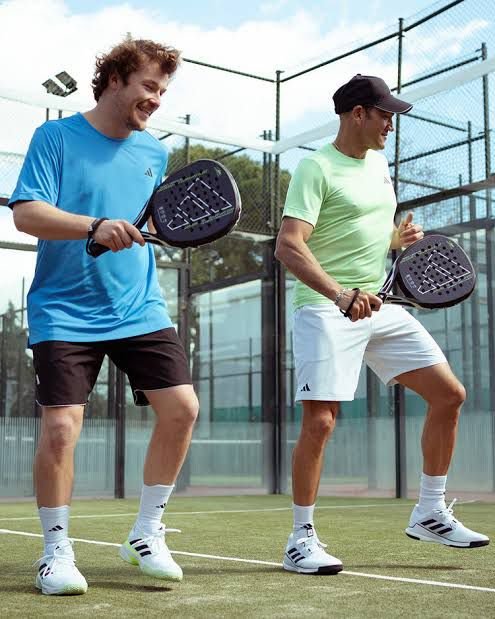
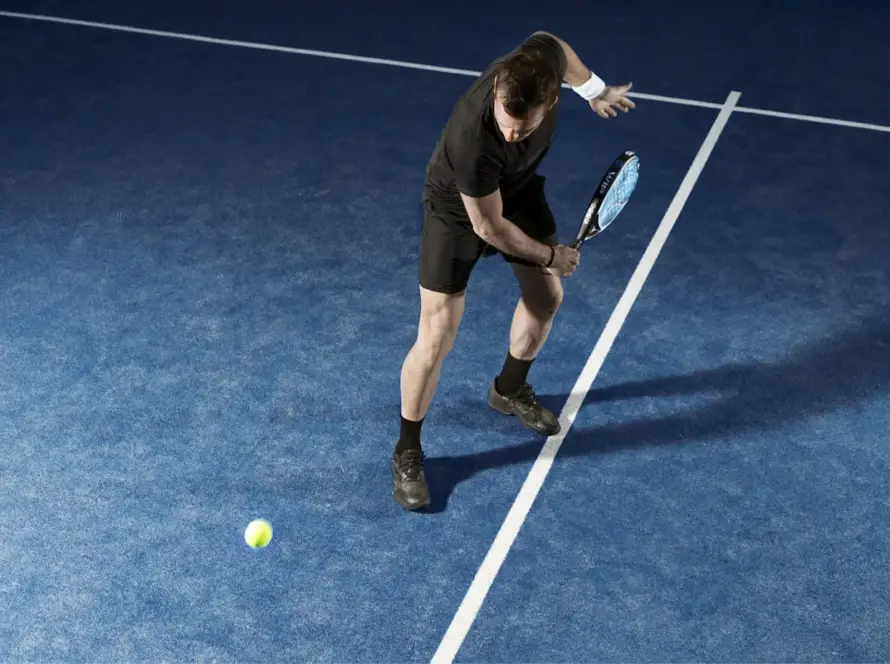
Learning the padel rules is the fastest way to enjoy the game from your very first session. The good news: padel borrows its scoring from tennis, plays on a smaller enclosed court, and lets you use the walls — which makes for longer, more social rallies. This definitive guide to the padel rules covers scoring, serving, the glass walls, the court layout and the most common faults, so you can step onto any court in Dubai or Abu Dhabi knowing exactly how the game works.
With 950+ courts across 320+ venues in the UAE and counting, there has never been a better time to get the basics right. Bookmark this page as your go-to padel rules reference.
The Padel Court: Layout and Dimensions
Padel is always played as doubles (two players per side) on an enclosed court. Understanding the court is the first step to understanding the rules.
- Size: The court is 20 metres long and 10 metres wide, divided by a net in the middle.
- Walls: The court is enclosed by glass walls and metal mesh fencing. These walls are in play — the ball can rebound off them.
- Service lines: Lines 3 metres from the net mark the service boxes on each side.
- Net height: The net stands 88 cm in the centre, rising to 92 cm at the posts.
In the UAE, the overwhelming majority of courts are indoor and climate-controlled. That is not a stylistic choice — it is essential from June to September, when outdoor temperatures regularly exceed 40°C. Indoor courts also give the glass a consistent, predictable bounce.
Padel Scoring: How Points and Games Work
If you have ever watched tennis, padel scoring will feel instantly familiar.
Points
Points within a game are counted as: 15, 30, 40, game. Zero is called “love.”
- If both teams reach 40-40, that is deuce.
- From deuce, a team must win two points in a row. The first point won is advantage; win the next and you take the game.
Many UAE clubs and social leagues use the faster “golden point” (sometimes called “punto de oro”). At 40-40 a single decisive point is played instead of advantage, and the receiving team chooses which side receives it. It is the standard on the pro tour and keeps casual games moving.
Games and Sets
- The first team to win 6 games wins the set, provided they lead by at least two games.
- At 6-6, a tie-break is played: first to 7 points, win by two.
- Matches are usually best of three sets.
The Serve: Padel’s Most Distinctive Rule
The serve is where padel diverges most clearly from tennis, and getting it right is the foundation of fair play.
- Serve underhand. The server must hit the ball below waist height. Overhead serves are not allowed.
- Bounce first. You must let the ball bounce once on the ground before striking it.
- Serve diagonally. As in tennis, the serve must land in the service box diagonally opposite, behind the service line.
- Keep one foot grounded. At the moment of contact, at least one foot must be on the floor, and you must stand behind the baseline without touching the line.
The serve must bounce in the correct box before the receiver plays it. If the served ball then hits the side glass after bouncing in, it is still in play. But if it strikes the metal mesh (fence) after the bounce, it is a fault.
Faults and Lets on Serve
- You get two serve attempts. Two faults in a row lose you the point (a double fault).
- If the serve clips the net and still lands correctly in the box, it is a let and is replayed.
- If the serve hits the net and then the mesh fencing, it is a fault.
Playing the Walls: What Makes Padel Unique
The walls are what transform padel from a smaller tennis into its own sport. They are the most fun part of the game and the source of the most rule confusion.
Using Your Own Back Wall
After the ball bounces on your side of the court, it can rebound off your own glass wall. You are allowed to let it come off the glass and then play it back over the net. This is completely legal and is the heart of padel’s long, defensive rallies.
The key rule: the ball must bounce on the floor first, then it may hit your walls. You then return it.
Hitting the Ball Into the Opponent’s Walls
- You may hit the ball so it goes over the net and bounces on the opponent’s floor before touching their glass — that is a normal shot.
- You may not hit the ball directly into your own walls and have it fly over the net without bouncing on the floor on your side first.
- A shot that bounces on the opponent’s floor and then flies out of the court (over the back glass) generally wins you the point — this is the spectacular “por tres” or out-of-court winner.
The Mesh / Fence vs. The Glass
This is the most important distinction in the padel rules:
- The glass is in play on your own side after a bounce.
- The metal mesh fencing is also in play after a bounce on your own side — you can play a ball that comes off your own fence.
- What you cannot do is let the ball hit any wall before it bounces on the floor. If the ball strikes any wall on your side before bouncing on the ground, you lose the point.
Common Faults: When You Lose the Point
You lose the point if:
- The ball bounces twice on your side before you return it.
- The ball hits any wall or the fence on your side before bouncing on the floor.
- You hit the ball into the net.
- You hit the ball directly out of the court without it bouncing first.
- The ball touches you or your partner (other than the racket).
- You touch the net or the opponent’s court with your body or racket.
- You hit the ball twice (“double hit”) or both partners hit it.
Padel Rules Quick FAQ
Can you smash the ball out of the court?
Yes. A smash that bounces on the opponent’s floor and then leaves the court over the back glass is a legal and winning shot. The defending team is allowed to chase the ball outside the court and play it back, which makes for some of padel’s most dramatic moments.
Can you play a ball off your own glass on the serve return?
Yes, once the serve has bounced correctly in your service box, you can let it rebound off the back glass and then return it.
Is padel always doubles?
Competitive and standard padel is doubles. Singles padel exists on a narrower court but is far less common.
Now You Know the Rules — Get the Right Gear
Knowing the padel rules is half the battle; the right equipment is the other half. A control-friendly racket helps beginners keep those wall rallies going, while quality pressurised balls give you a true, predictable bounce off the glass.
- New to the game? The NB Enebe Point Light (AED 240) is a forgiving, lightweight first racket.
- Not sure which racket suits your level? Try our RacketBot quiz for a personalised recommendation in under a minute.
- Browse the full range of padel rackets and padel balls.
Print this guide, learn the serve, master the walls — and we will see you on court. Ready to play? Shop everything you need at Padel Point.